
Hi, I'm David M.. I live in Detroit. Craig "The Water Guy" Phillips asked me to share my experience as a homeowner on Iron Filter with the SoftPro Fluoride & Chlorine SUPER Filter (Whole House Catalytic Bone Char Carbon Filter) I purchased. This is how my adventures played out. I hope this helps you in your decision.
Did you know that most whole house water filters come with vague installation instructions that leave you guessing about crucial setup procedures?
That's exactly what I discovered when I installed my SoftPro Upflow Catalytic Bone Char Carbon Water Filter six months ago. Like many homeowners in Detroit, I was dealing with chlorine taste, fluoride concerns, and that persistent metallic aftertaste that made our tap water nearly undrinkable. After months of research and comparing different filtration technologies, I settled on this comprehensive system. What I didn't expect was the learning curve that came with proper installation and the questions that would arise along the way.
The journey to finding the right whole house filtration system wasn't straightforward. My family had been relying on bottled water for drinking and basic cooking, but the costs were adding up quickly. More importantly, we weren't addressing the bigger picture – our showers, dishwasher, and washing machine were still processing the same contaminated municipal water. The chlorine was drying out our skin, leaving spots on glassware, and I suspected the fluoride levels weren't doing us any favors either.
The Problem That Pushed Me to Act
Our water situation in Detroit had been deteriorating gradually over the past few years. What started as a slight chlorine smell became an overwhelming chemical taste that made morning coffee almost unbearable. The TDS levels in our municipal supply consistently tested between 180-220 ppm, with chlorine readings averaging 2.8 ppm – well above what I considered acceptable for daily consumption.
The breaking point came when our dishwasher started leaving white film residue on everything, despite using expensive rinse aids. Our morning showers left our skin feeling tight and dry, and my wife's hair became increasingly brittle. I tested our water with a basic kit and found not only elevated chlorine but also traces of fluoride at 0.9 ppm, which concerned me given our young children's exposure.
I had tried basic pitcher filters and even a countertop system, but these solutions only addressed drinking water. The volume limitations meant constant refilling, and they did nothing for our household appliances or bathing water. What good is clean drinking water when you're still bathing and cleaning with contaminated supply?
The answer was obvious – I needed a comprehensive whole house solution that could handle multiple contaminants simultaneously.
After researching various filtration technologies, I learned about the science behind catalytic carbon and bone char media. Traditional activated carbon primarily removes chlorine through adsorption, but catalytic carbon actually breaks down chloramine bonds – something our water utility had started using more frequently. Bone char, derived from cattle bones, has a unique affinity for fluoride removal that standard carbon simply can't match.
Research and Decision Process
My research phase lasted approximately three months, during which I dove deep into different filtration technologies. I compared salt-based ion exchange systems, reverse osmosis whole house units, standard carbon filters, and catalytic carbon combinations. Each technology had distinct advantages, but most addressed only specific contaminant categories.
The catalytic carbon approach appealed to me because it handles both chlorine and chloramines without the waste water associated with RO systems. When I discovered that SoftPro combined catalytic carbon with bone char media, I found a system that could simultaneously address my chlorine, chloramine, and fluoride concerns in one unit.
Capacity calculations were crucial in my decision. With a family of four and typical water usage around 280 gallons per day, I needed a system that could maintain adequate flow rate during peak demand periods. The upflow design caught my attention because it allows for better media utilization and longer contact time without creating excessive pressure drop.
I also evaluated certification standards, looking specifically for NSF/ANSI Standard 42 for chlorine reduction and Standard 61 for health effects. The bone char component's fluoride reduction capabilities were particularly important, as few whole house systems effectively address this contaminant.
Installation Experience and Initial Setup
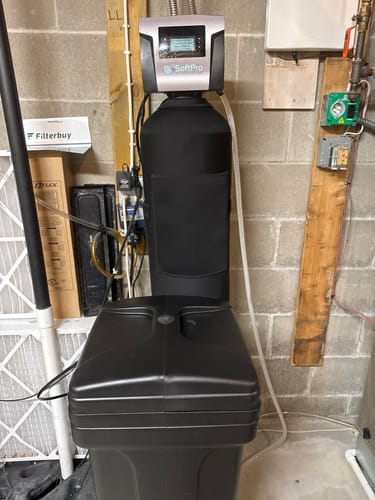
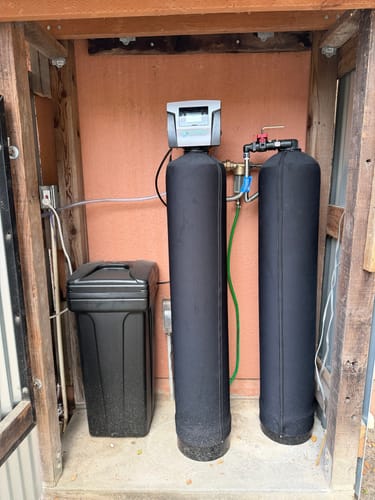
The unit arrived well-packaged with all necessary components included. The system itself is substantial – weighing approximately 180 pounds when filled with media – so proper mounting and support were essential considerations. I chose to install it in our basement utility room, where I had adequate space for the 10-inch diameter tank and access for future maintenance.
The installation process took me about four hours, including the time spent installing a bypass valve system and making the necessary plumbing connections. The upflow design requires specific inlet and outlet positioning, which the included diagram illustrated clearly. I used 1-inch copper connections with compression fittings, ensuring adequate flow capacity for our household demand.
Here's where my experience diverged from the standard instructions, and this is the heart of my review. Unlike some competitors who explicitly recommend a 24-hour soaking and flushing period, SoftPro's documentation didn't emphasize this critical step. However, based on my research into catalytic carbon and bone char media, I decided to implement this procedure anyway.
I filled the system and let it sit for 24 hours before initiating the flushing process. Why didn't the manufacturer emphasize this crucial step?
When I began flushing, it took approximately 10 minutes of continuous flow before the water ran completely clear. During those initial minutes, I observed fine carbon particles and sediment that would have otherwise entered our household plumbing system.
As an additional precaution, I installed a 5-micron sediment filter downstream from the main unit. This secondary filter catches any residual carbon fines or media particles that might migrate during the system's operation, providing extra protection for our fixtures and appliances.
Performance Analysis and Water Quality Results

The transformation in our water quality became apparent within 48 hours of installation. Using TDS meters and chlorine test strips, I documented the before and after measurements to track the system's effectiveness objectively.
Chlorine reduction was immediately noticeable. Pre-filtration readings of 2.8 ppm dropped to undetectable levels (below 0.1 ppm) consistently across multiple tests. The metallic taste disappeared entirely, and our morning coffee actually tasted like coffee again rather than diluted pool water.
Fluoride reduction proved more challenging to measure with home test kits, but I sent water samples to a local laboratory for professional analysis. Pre-filtration fluoride levels of 0.9 ppm reduced to 0.2 ppm after treatment – a significant improvement that put our water well below the EPA's maximum allowable level of 4.0 ppm.
Flow rate performance exceeded my expectations. Even during peak demand periods – simultaneous shower and dishwasher operation – I measured 8.5 GPM at our main fixtures with minimal pressure drop. The upflow design's even media distribution prevents channeling and maintains consistent contact time across varying flow rates.
One unexpected benefit was the improvement in our soap and detergent effectiveness. With chlorine and chloramines removed, our laundry detergent works more efficiently, and we've actually reduced the amount needed per load by about 25%.
Daily Living Impact and Household Changes
The most immediate change was in our drinking and cooking water quality. That harsh chemical taste vanished completely, making tap water genuinely enjoyable again. My wife noticed the difference in her tea within the first week, commenting that the flavors were clearer and more vibrant without the chlorine interference.
Shower experiences improved dramatically for our entire family. The dry, tight skin feeling disappeared, and my wife's hair regained its natural softness within two weeks. Our children's sensitive skin, which had been showing signs of irritation, cleared up noticeably.
Our dishwasher performance transformed as well. The white film residue that had plagued our glassware completely disappeared, and we've been able to reduce our rinse aid usage by half. Even our stainless steel cookware comes out spotless without manual pre-rinsing.
Have you ever noticed how much better food tastes when prepared with truly clean water?
Our pasta, rice, and steamed vegetables have more pronounced flavors now that they're not competing with chemical tastes. Even ice cubes are crystal clear instead of the slightly cloudy appearance we had grown accustomed to.
The psychological benefit of knowing our water is thoroughly filtered can't be understated. We've eliminated bottled water purchases entirely, saving approximately $85 per month while reducing plastic waste. Guests frequently comment on how good our tap water tastes, which has become a point of pride.
Maintenance Requirements and Operational Costs
The system's maintenance schedule is refreshingly straightforward compared to some alternatives I researched. The catalytic carbon and bone char media combination has an estimated lifespan of 6-8 years under normal usage conditions, making it relatively low-maintenance for a whole house system.
Monthly monitoring involves checking the downstream sediment filter I installed, which requires replacement every 3-4 months at approximately $15 per filter. This small investment provides valuable protection for both the main system and our household plumbing.
The unit operates without electricity, eliminating ongoing power costs associated with UV sterilizers or electronic monitoring systems. Water usage for backwashing or regeneration isn't required, unlike salt-based systems that can waste hundreds of gallons per cycle.
Annual operating costs break down to approximately $45 for replacement sediment filters, with the major media replacement projected at $400-500 every 6-8 years. Compared to our previous bottled water expenses of over $1,000 annually, the economics are compelling.
I perform basic system checks quarterly, including pressure measurements and visual inspections of connections and mounting hardware. The bypass valve system allows for easy maintenance without shutting down our household water supply.
Honest Limitations and Areas for Improvement
Despite the overall positive experience, several limitations deserve mention for potential buyers considering this system. The physical size requires adequate installation space – not suitable for cramped utility areas or apartments with limited access to main water lines.
Installation weight becomes a factor if you're considering wall mounting. The filled system exceeds 200 pounds, requiring robust mounting hardware and potentially structural reinforcement depending on your installation location.
The lack of clear guidance on initial system preparation remains my primary concern with SoftPro's documentation. Why leave customers guessing about crucial setup procedures?
This omission could lead to premature media degradation or reduced filtration effectiveness for users who don't research beyond the provided instructions.
Temperature sensitivity of the bone char media means very hot water (above 100°F) can reduce fluoride SoftPro Fluoride Filter removal effectiveness over time. While this doesn't affect normal household usage, it's worth understanding for long-term performance expectations.
The system doesn't address bacterial or viral contamination, so users with well water or areas with biological contamination concerns would need additional treatment stages. It's specifically designed for municipally treated water that already meets basic safety standards.
Final Assessment and Recommendations
After six months of ownership, I'm thoroughly satisfied with the SoftPro Upflow Catalytic Bone Char Carbon Water Filter's performance and value proposition. The combination of chlorine, chloramine, and fluoride removal in a single system delivers comprehensive water treatment that has genuinely improved our family's daily life.
The investment has proven worthwhile both financially and health-wise. Our monthly savings on bottled water alone justify the system cost over time, while the intangible benefits of better-tasting food, improved skin and hair condition, and peace of mind add significant value.
For homeowners dealing with heavily chlorinated municipal water, fluoride concerns, or multiple contaminant issues, this system provides an elegant single-unit solution. The upflow design and quality media deliver consistent performance without the complexity or ongoing costs of multi-stage systems.
However, I strongly recommend implementing the 24-hour soaking and thorough flushing procedure during installation, regardless of what the official instructions suggest. Additionally, installing a downstream sediment filter provides valuable insurance against any media migration.
Would I purchase this system again knowing what I know now?
Absolutely. The combination of effectiveness, low maintenance requirements, and long-term value makes it an excellent investment for households serious about comprehensive water quality improvement. Just be prepared to do your homework on proper installation procedures to ensure optimal performance from day one.